

 South Korea

Doenjang-jjigae
된장찌개
Korean dish of soybean paste stew
About this dish
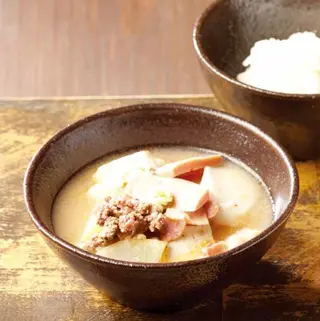
Doenjang-jjigae, referred to in English as soybean paste stew, is a Korean traditional jjigae (stew-type dish), made from the primary ingredient of doenjang (soybean paste), and additional optional ingredients of vegetables, seafood, and meat. It is one of the most iconic and popular traditional dishes in Korean cuisine, and is often eaten regularly regardless of occasion or time of day. Doenjang-jjigae was initially made with home-made doenjang; however, due to extensive industrialisation of soybean paste, households and restaurants nowadays use factory-made doenjang instead as their ingredient. From traditional to modern Korean cuisine, doenjang has become one of the most frequently used jang (sauce/paste). It is claimed as a national dish. Doenjang-jjigae is often mistaken for doenjang-guk (soybean paste soup).
Description: Wikipedia — Doenjang-jjigae, CC BY-SA 4.0
Army Base Doenjang Stew (Budae Doenjang Jjigae)
Ingredients Tap an ingredient to check it off
- dried kelp (dasima)다시마1 g
- tofu두부10 g
- sliced rice cakes for tteokguk (tteok)떡국 떡10 g↔ No sliced rice cakes for tteokguk (tteok)? No rice cakes? Use gnocchi for a similar chew, or thick udon noodles.🛒 Where to buy: Korean grocery stores (fresh or frozen); some Asian supermarkets
- Spam (mild)스팸(마일드)(mild)10 g
- minced garlic다진 마늘5 g
- Korean radish무20 g↔ No Korean radish? Daikon is the closest. Turnip works in soups.🛒 Where to buy: Daikon is in many supermarkets and all Asian grocery stores
- kimchi김치15 g↔ No kimchi? Store-bought kimchi works well. For cooking, older and more sour kimchi tastes better. Sauerkraut with a little gochugaru is a last resort.🛒 Where to buy: Refrigerated section of many supermarkets, Korean grocery stores
- sausage소시지(1/2 pc)10 g
- ground pork (minced)우민찌(1 tsp)5 g
- onion양파5 g
- low-sodium doenjang (soybean paste)저염된장(1 tbsp)15 g↔ No low-sodium doenjang (soybean paste)? Use red or brown miso. Miso is sweeter and milder, so add a little more and a pinch of salt.🛒 Where to buy: Korean grocery stores; miso is in most supermarkets
- bacon베이컨5 g
- green onion대파5 g
- cheongyang chili pepper (Korean hot green chili)청양고추5 g
- red chili pepper홍고추1 g
Nutrition per serving
Steps
Translated from the Korean original. Amounts are as in the original recipe.
- Slice the kimchi, bacon, Spam, sausage, onion, tofu and radish 0.5cm thick.
- Boil the dried kelp in water to make kelp broth.
- Put the sausage, bacon, tofu, Spam, radish, ground pork, kimchi and 300g of kelp broth in a pot and boil. Add the low-sodium doenjang, onion, green onion, minced garlic and rice cakes, and when all the ingredients are cooked, finish by adding the red chili pepper and cheongyang chili pepper.
Diet and allergy labels are estimated from the ingredient list. Check labels if you have an allergy.
Recipe source: Korea Ministry of Food and Drug Safety (MFDS) recipe database. English translation by WorldFoodPedia, not by MFDS.
Community recipes
No community recipes yet.
Sign in to share recipes, rate and comment.
Share your recipe for Doenjang-jjigae
More dishes from South Korea
View all Recipe
 Recipe
 Recipe
 Recipe
 Recipe
 Recipe
 Recipe
 Recipe