

Photo: Hyeon-Jeong Suk, CC BY 2.0, Wikimedia Commons
 South Korea

Gyeongdan
경단
Boiled rice cake balls
About this dish
Gyeongdan (Korean: 경단) or Korean rice ball cake is a type of tteok (rice cake) made of glutinous rice or other glutinous cereal flours. When the cereal other than rice is used, its name is usually specified, making compound nouns such as susugyeongdan (수수경단, "sorghum ball cake"). The name chapssalgyeongdan (찹쌀경단, "glutinous rice ball cake") may also be used, but chapssal can be, and usually is, omitted. Gyeongdan can be made by kneading glutinous rice flour into chestnut-sized balls, then boiling them in water, and coating them with honey, mashed red beans or mung beans, or toasted and ground sesame seeds, etc. The gyeongdan have various kinds of gomul, making them look pretty, but they are not inflexible even after a long period of time because of gomul.
Description: Wikipedia — Gyeongdan, CC BY-SA 4.0
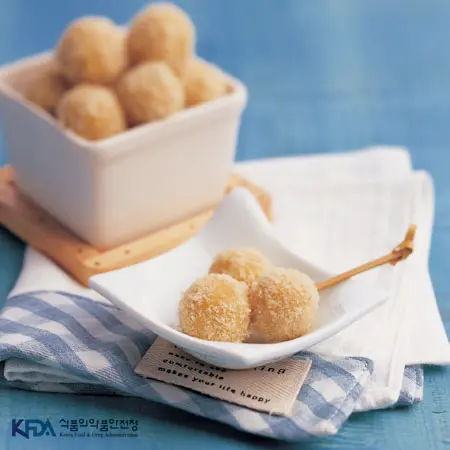
Sweet Potato Rice Balls (Goguma Gyeongdan)
Ingredients Tap an ingredient to check it off
- sweet potato고구마50 g
- sponge cake (castella)카스텔라20 g
- milk우유5 g
- butter버터2 g
- honey꿀3 g
- raisins건포도20 g
- salt to taste소금 적당량
Nutrition per serving
Steps
Translated from the Korean original. Amounts are as in the original recipe.
- Steam the sweet potato in a steamer.
- Peel the sweet potato and press it finely through a sieve.
- Cut off the brown top of the sponge cake and grind it finely in a blender into crumbs.
- Add milk, butter, honey, and salt to step 2 and mix into a dough.
- Put 1 to 2 raisins in the dough from step 4 and shape into balls.
- Coat the balls with the sponge cake crumbs.
Diet and allergy labels are estimated from the ingredient list. Check labels if you have an allergy.
Recipe source: Korea Ministry of Food and Drug Safety (MFDS) recipe database. English translation by WorldFoodPedia, not by MFDS.
Community recipes
No community recipes yet.
Sign in to share recipes, rate and comment.
Share your recipe for Gyeongdan
More dishes from South Korea
View all Recipe
 Recipe
 Recipe
 Recipe
 Recipe
 Recipe
 Recipe
 Recipe