
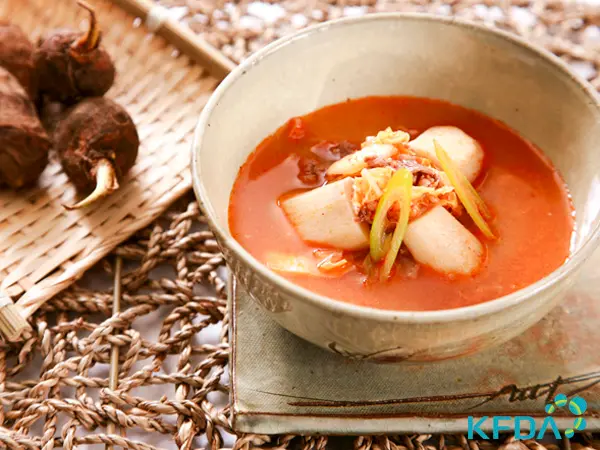
Photo: Korea Ministry of Food and Drug Safety
 South Korea
Napa Cabbage and Taro Soup (Baechu Toran-guk)
배추토란국
Soup & stew · Boiled
Soups & stewsCourse
78kcal · per serving
2/5Spice
No porkGluten-free
Recipe
Napa Cabbage and Taro Soup (Baechu Toran-guk)
🌶 Spicy 2/5No porkGluten-freeContains: soy, sesame
Ingredients Tap an ingredient to check it off
Servings1
Shopping in
- taro (toran)토란50 g
- beef brisket쇠고기 양지15 g
- napa cabbage배추10 g
- green onion대파2.5 g
- gochugaru (Korean chili flakes)고춧가루1.7 g↔ No gochugaru (Korean chili flakes)? Mix 2 parts sweet paprika with 1 part cayenne or red pepper flakes. Less smoky and a bit hotter, so start with half.🛒 Where to buy: Korean or Asian grocery stores (H Mart, Lotte Plaza), the international aisle of large supermarkets, or online
- doenjang (soybean paste)된장9 g↔ No doenjang (soybean paste)? Use red or brown miso. Miso is sweeter and milder, so add a little more and a pinch of salt.🛒 Where to buy: Korean grocery stores; miso is in most supermarkets
- water물180 g
- sesame oil참기름1 g
Nutrition per serving
78kcal
6.8gCarbs
6gProtein
3.1gFat
564.9mgSodium
Steps
Translated from the Korean original. Amounts are as in the original recipe.
- Peel the taro with a potato peeler and cut into 3 to 4 pieces.
- Cut the beef and napa cabbage into 5 mm widths and slice the green onion on the diagonal.
- Soak the taro in lightly salted water (1 cup water + 1 g salt).
- Stir-fry the beef and minced garlic in sesame oil, and when fragrant, add the gochugaru and stir-fry a little longer.
- Pour water over the stir-fried beef and dissolve in the doenjang.
- When the broth boils, add the napa cabbage, taro, and green onion and bring to a quick boil.
💡 TipIf you lightly blanch leftover napa cabbage scraps and freeze them, adding them when making soup saves time and reduces waste. - To remove the acrid taste of taro, soak it in salted water or blanch it in rice-rinse water.
Diet and allergy labels are estimated from the ingredient list. Check labels if you have an allergy.
Recipe source: Korea Ministry of Food and Drug Safety (MFDS) recipe database. English translation by WorldFoodPedia, not by MFDS.
Community recipes
No community recipes yet.
Sign in to share recipes, rate and comment.
Share your recipe for Napa Cabbage and Taro Soup (Baechu Toran-guk)
More dishes from South Korea
View all Recipe
BibimbapKorean rice bowl dish
 Recipe
BulgogiMarinated, grilled Korean beef dish
 Recipe
GimbapKorean seaweed roll
 Recipe
KimchiTraditional Korean dish of fermented vegetables
 Recipe
TteokbokkiSouth Korean dish made from rice and flour cakes
 Recipe
NaengmyeonKorean dish of cold noodles
 Recipe
GalbiGrilled beef or pork ribs in Korean cuisine
 Recipe
JapchaeKorean dish of stir-fried glass noodles and vegetables